
Tokyo Restaurant Recommendations, Picked by DineTrip³
Ratings and rankings won’t tell you which Tokyo restaurant suits your trip. Here’s what our Foodie Agent looks for, and how six meals become three days.
DineTrip³ Editorial
Foodie Agent
Tokyo has traditional counters, neighborhood places that have fed the same street for generations, and kitchens working on something nobody has tried yet. All of it is good. That’s the trouble with Tokyo restaurant recommendations; the city gives you more right answers than you have meals.
So we don’t start from a ranking. Our Foodie Agent reads the things a score can’t hold: how a kitchen handles what it’s given, what a room feels like once it’s full, how close you sit to the person cooking. Then it matches that against what you actually want. The 3-Day Table goes one step further and plans six meals across three days as a single arc rather than six separate bookings.
Here’s what we look for in a restaurant, and the three kinds of eating Tokyo does best.
What Is the 3-Day Table?
It’s our patent-pending way of planning a trip’s worth of meals: six of them, over three days, designed as one sequence instead of six unrelated reservations.
Tokyo runs from sushi and tempura at one end to the specialist who has cooked one dish for thirty years, to kitchens with an entirely modern argument. Lining up the six most popular of those would give you a good week and a repetitive one. We build in contrast instead, so every meal lands differently from the one before it.
Six Meals, One Story
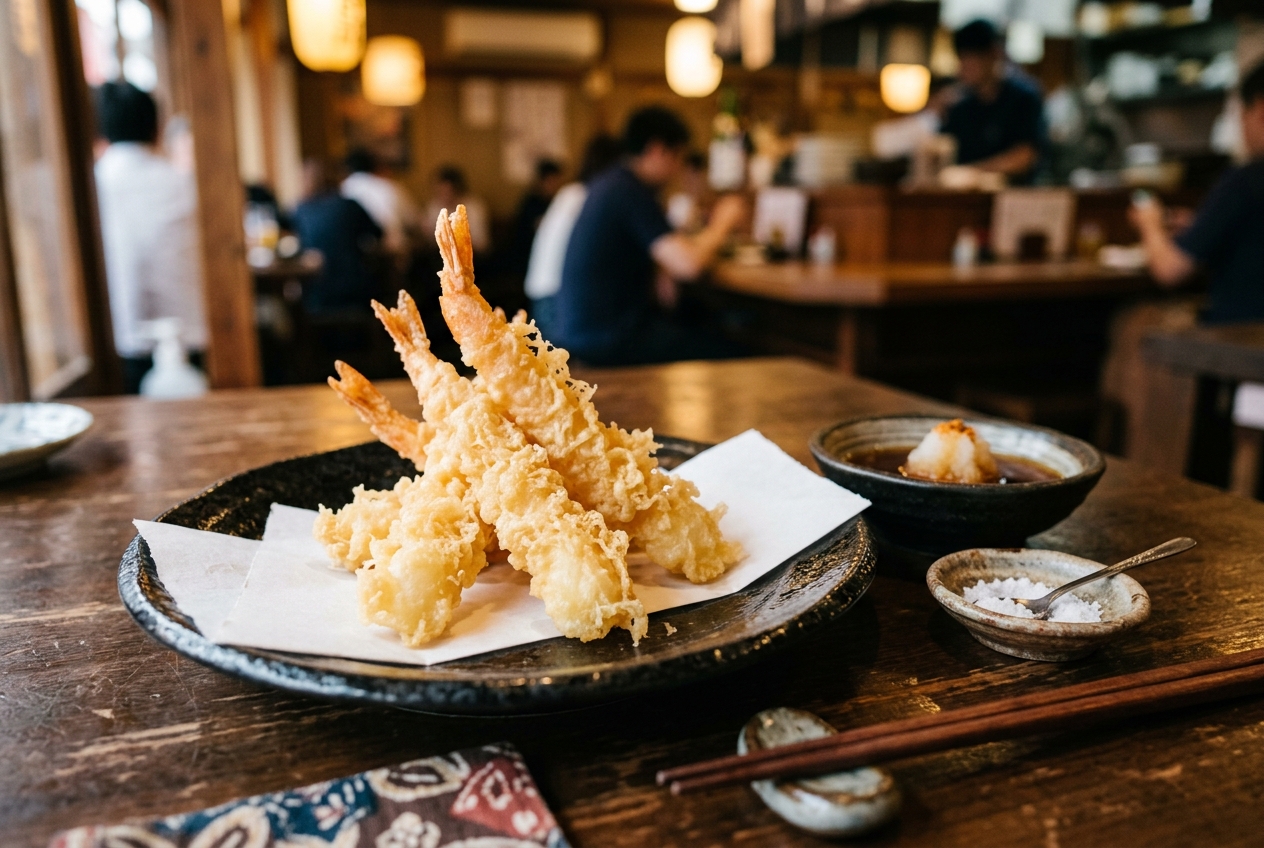
The six meals are planned as one sequence, not a list. Each one should show you something the last one didn’t, and the meals you’re still describing to people once you’re home are the whole point.
No Two Meals the Same
We balance the six so nothing repeats; not the cuisine, not the price bracket, not the kind of room. A classic sushi counter and a specialist who does one thing. One dinner you dress for and one you don’t. Three days is enough to see several sides of how Tokyo eats, but only if the six meals aren’t variations on each other.
Built Around Your Trip
What you want to eat and what you’ll spend are where it starts. Where you’re staying matters too, and so does what each meal is for: the long dinner, the quick lunch between two neighborhoods, the last night. Travel time is finite, and the plan should fit inside it without you crossing the city at speed to make a reservation.
What the Foodie Agent Sees That a Rating Doesn’t
The Foodie Agent is our own AI, trained on how experienced eaters judge a restaurant rather than on star averages.
Review scores and name recognition tell you a place is busy. They don’t tell you whether the rice is seasoned to that chef’s taste, whether the room is somewhere you’d happily sit for two hours, or what the person behind the counter is like when it’s quiet. Those are the things it reads for.
What comes back is usually a restaurant you wouldn’t have reached by scrolling.
What They Do, and How Well They Do It
Ingredients, technique, and what the kitchen is actually trying to do. Famous doesn’t qualify a restaurant and neither does expensive. The question is narrower than that: is this worth one of your six meals?
Who’s Behind It
A chef’s obsessions, the traditions a shop has chosen to keep, why it opened where it did. None of that shows up in a score, and all of it changes the meal. You taste a dish differently once you know what someone was going for.
The Room, Not Just the Plate
The space, the service, how close you sit to the person cooking. A counter where the chef hands you each piece is a different evening from a table for four, even with identical food. We’re choosing for whether the two hours stay with you, not only for whether the food is good.
Whether It Fits Your Trip
A restaurant can be excellent and still be wrong for you; too far out, too formal, too long a meal on a day that’s already full. So the last filter is fit: what you want to eat, what you’ll spend, where you’ll be, and what the meal is for.
Three Kinds of Tokyo Meal, and Where to Have Them
Restaurants Where the Tradition Is the Point
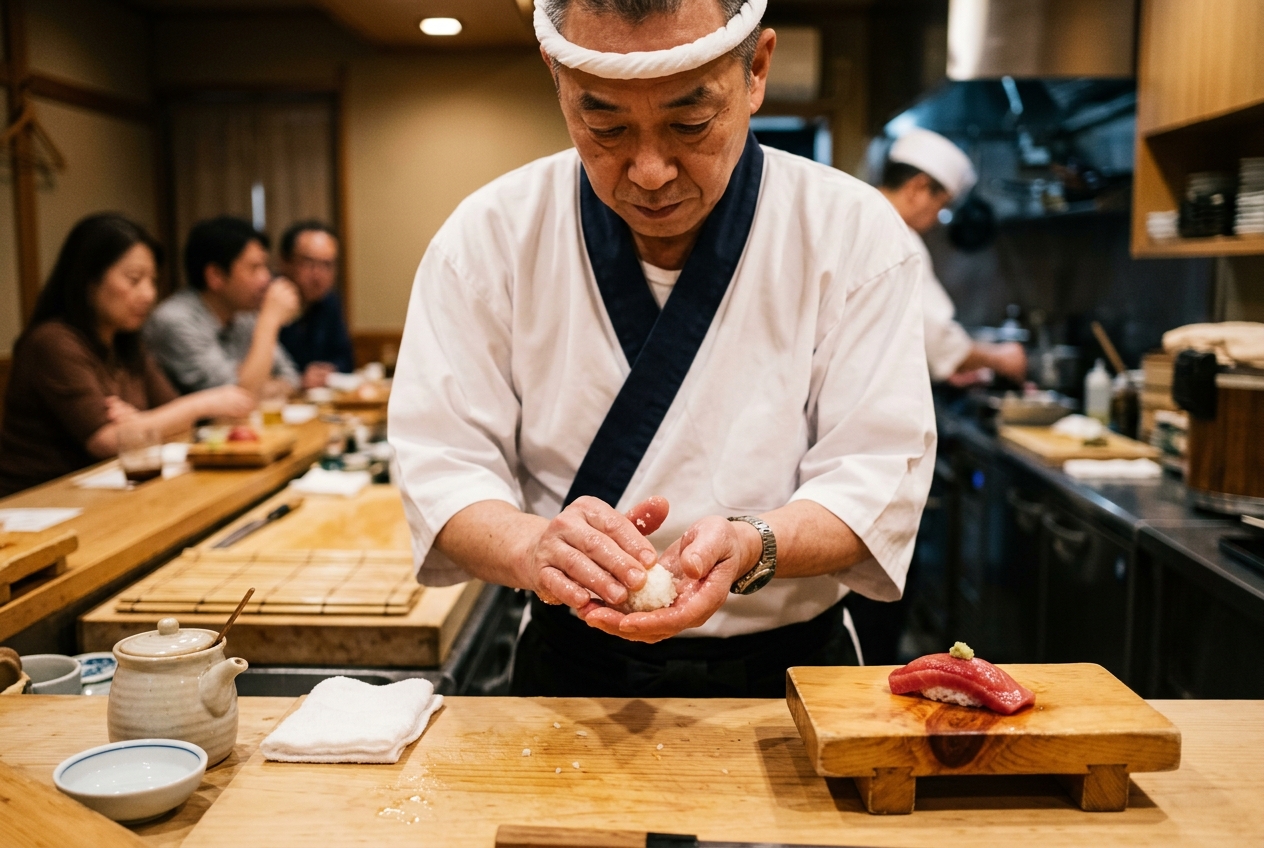
Japanese food culture shows up in the technique more than the menu. It's how a chef handles what’s in season, the economy of movement behind the counter, the way hospitality shifts with the month. These are places where you can watch that happen.
- Sushi Kanesaka (Ginza, Edomae sushi): Fish, rice, and wasabi in balance, and the precise handwork Edomae sushi is built on.
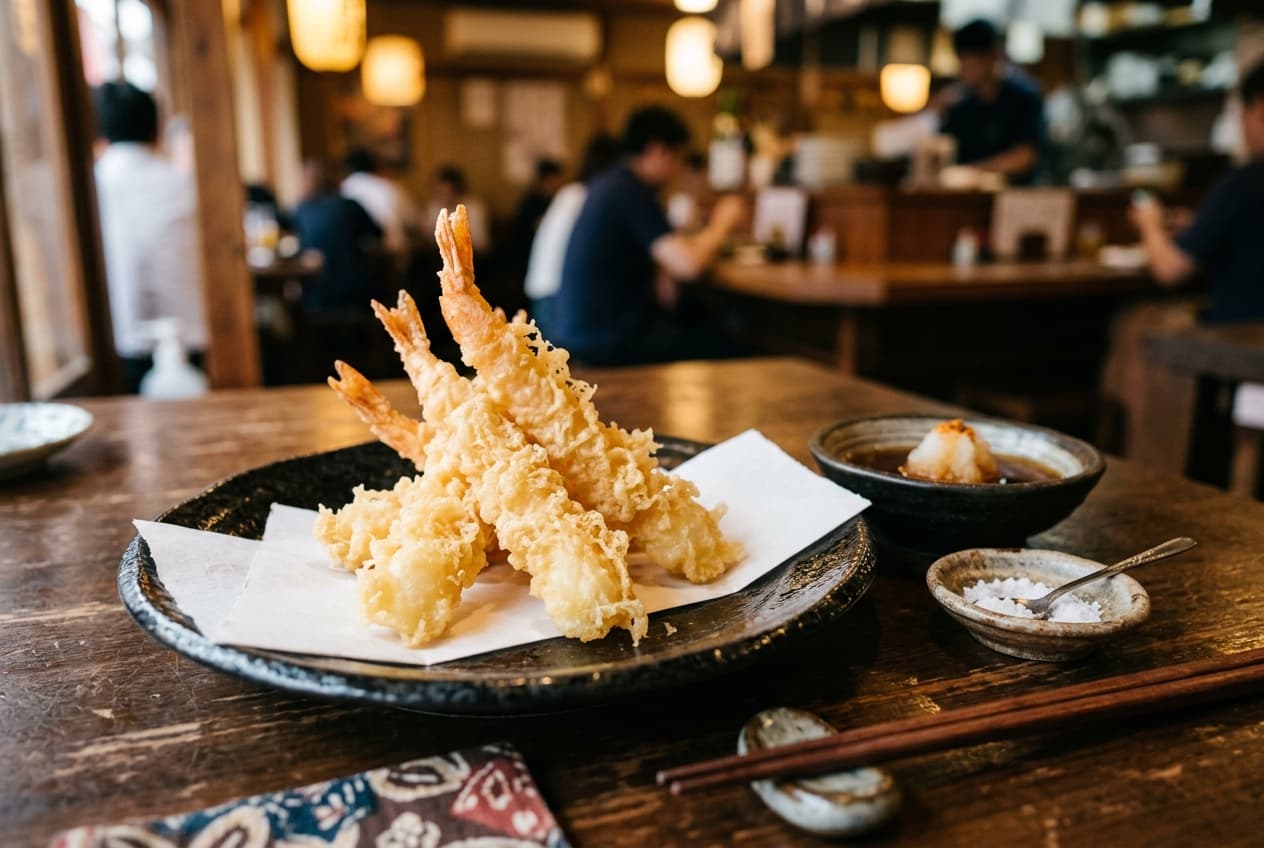
- Tempura Kondo (Ginza, tempura): Batter thin enough that the seafood and vegetables keep their own aroma and texture.
- Akasaka Watanabe (Akasaka, kaiseki): A seasonal omakase kaiseki course, which is where Japanese cooking’s sense of season and hospitality is easiest to see.
- Kaneman (Ningyocho, fugu): A long-established Nihonbashi Ningyocho restaurant built around fugu, the pufferfish that takes a licensed chef to serve.
The genres are different. What they share is a relationship with ingredients and a level of craft that takes years to reach, and on a good night you can watch it happening in front of you.
Restaurants Where the City Eats After Work
There’s a whole layer of Tokyo eating that isn’t aimed at visitors. Oden, the simmered one-pot dish people stop for on the way home. The standing bar where nobody sits down. A monjayaki griddle shared with three friends and a beer. Every neighborhood does it its own way.
We list places where the room and the people in it are part of the point: what the street is like at that hour; and how people here actually spend an evening.
- Shimbashi Otakou (Shimbashi, oden): Traditional Tokyo oden simmered in a dark, strong broth, as it has been since 1932.
- Tachinomi Kadokura (Ueno, standing bar): Seafood and meat by the plate, in the loud, casual standing-bar culture Ueno does best.
- Monja Shinanoya (Tsukishima, monjayaki): A Tsukishima griddle, with more attention paid to the dashi than most.
- Jidoriya Tsukada Shibuya (Shibuya, jidori chicken): Charcoal-grilled jidori and the rarer cuts, in the middle of Shibuya’s izakaya energy.
Different food, different pace, same thing underneath: these are restaurants embedded in the city rather than pointed at it. They’re the part of Tokyo that sightseeing walks past.
Restaurants Working on Something New
Tokyo also turns out restaurants that don’t fit a genre, like French technique running through Japanese ingredients, a dining room built around a story, a menu making an argument about what food will be.
For these, the idea is as much of the meal as the cooking. We list them when the concept holds up on the plate.
- Global French Kitchen Shizuku (Minami-Ikebukuro, global French): French technique with Japanese and Italian elements, served as a course you eat casually, with chopsticks.
- Azabu-Juban Teppanyaki Romantei (Azabu-Juban, creative teppanyaki): Wagyu and seasonal seafood cooked in front of you, in a room themed on the Taisho era.
- Akasaka Na Camo Guro (Akasaka, Mogami duck): Yamagata-raised Mogami duck with French influence, served as a course with wine.
- NEO Shinjuku ATSUSHI (Shinjuku, food of the future): A concept restaurant where plant-based cooking meets a cyberpunk dining room.
Rethinking what goes on the plate, how it’s cooked, and what the room is doing is as much a part of Tokyo’s food culture now as the counters that have kept the same method for generations. These tend to be the meals people come home talking about.
How the Recommendation Gets Made
Nothing here is decided by popularity or a review average. The Foodie Agent holds a restaurant’s actual qualities up against what you’ve told us you want, and the recommendation comes out of the overlap. Four steps.
Step 1. Find the Restaurants Worth Considering
The Foodie Agent, trained on how serious eaters read a restaurant, works through our vetted list looking at the cooking, the specialization, the chef’s approach, the space, and the feel of the room. That gives us a shortlist.
Step 2. Match Them Against Your Trip
Then we narrow it down: what you want to eat, what you’ll spend, your dates, where you’re staying, and what each meal is for.
Step 3. Pick the Meals You Want
With the 3-Day Table you get six restaurants across three days and choose the ones you want. If you’d rather book a single restaurant instead, you can pick one from Special Selection or Recommended for You.
Step 4. Request the Booking Online
Once you’ve decided, you fill in the details on the site and send the request. That’s your part done. We call the restaurant in Japanese and arrange it from there, and when it’s confirmed the restaurant details, date, and time come to you by email.
If your plans change, we’ll handle the cancellation at no charge. As a rule, let us know at least five days before the reservation date, Japan time.
Let’s Plan Your Three Days in Tokyo
Six meals is a small number for a city this size. Spent well, they’re most of what you’ll remember.
Tell the Foodie Agent what you want to eat, what you’ll spend, and where you’ll be, and it builds three days out of that: a counter that has kept the same method for generations, a griddle in Tsukishima, a room arguing about what dinner looks like in fifty years.
We make the calls. You just show up hungry.